




Daniel Miranda, Ismael Aguayo, Juan Carlos Castillo, Nicolas Tobar y Tomás Urzúa
X Seminar “Data from and for the educational system: tools for research and teaching”, Ostia, Rome, 19 - 20 - 21 November 2025


“… expectations about one’s capabilities to learn and accomplish tasks in digital technologies and digital environments, is one of the principal components to promote the formation of digital competences” (Ulffert-Blank & Schmidt, 2022).
A changing concept: Computacional -> Internet -> TICs -> Digital (DigComp)
In the last years it has been proposed a distinction between two types of self-efficacy: general and specialized.
Cross-country studies operationalize digital self-efficacy in a one-dimensional and two-dimensional manner
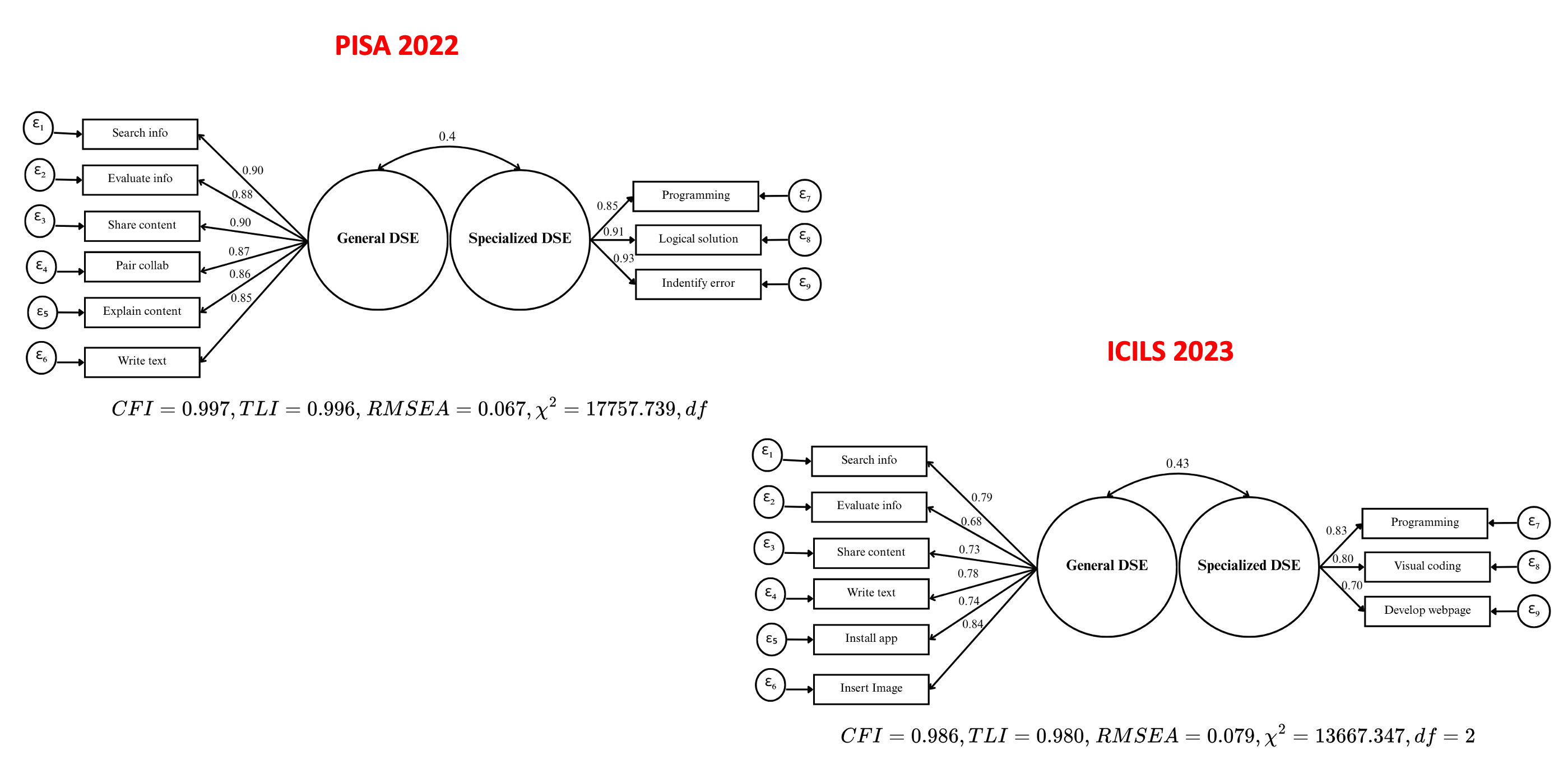
It is possible to identify two dimensions on PISA Digital Self-efficacy measurement?
Is the bidimensional model of Digital Self-efficacy equivalent by gender and across countries?
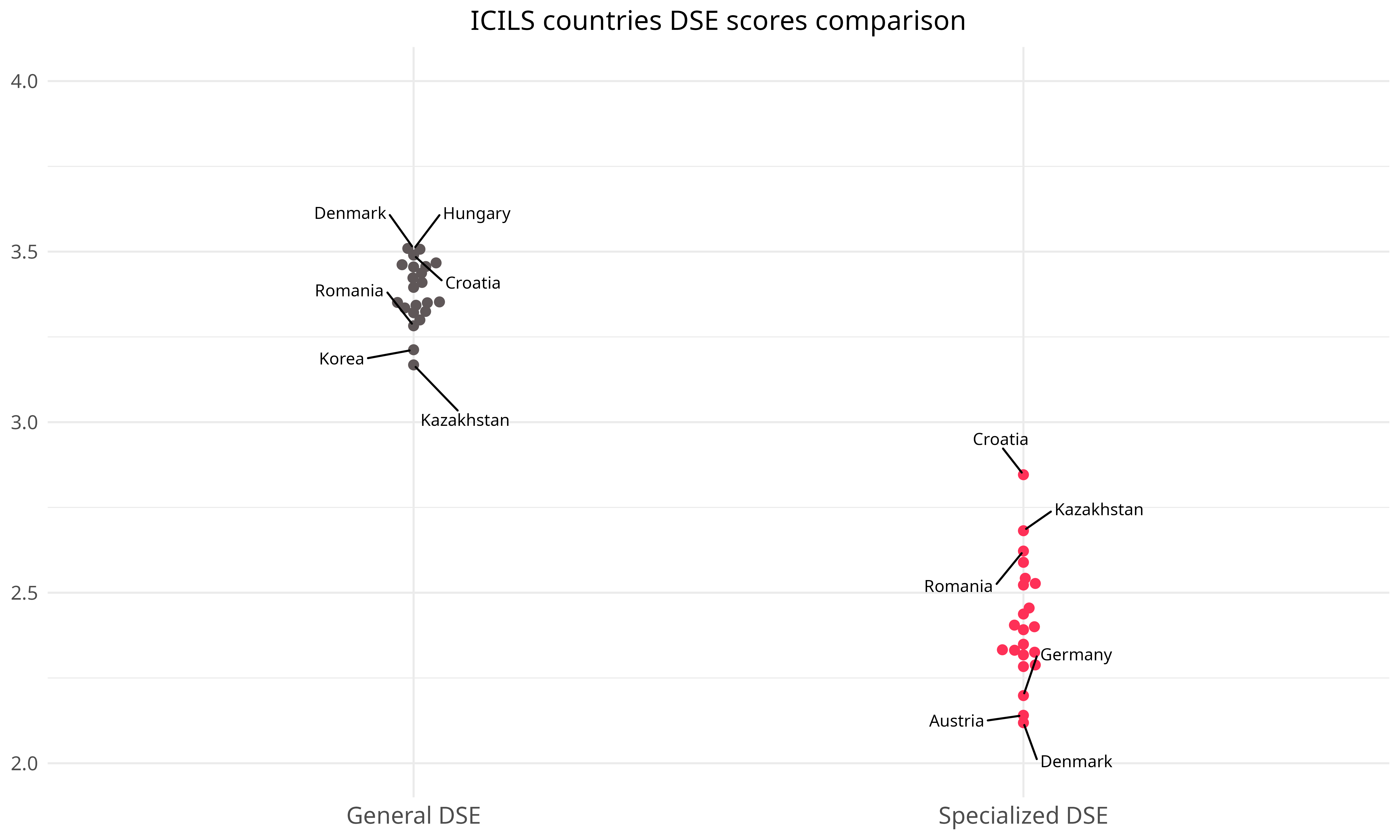
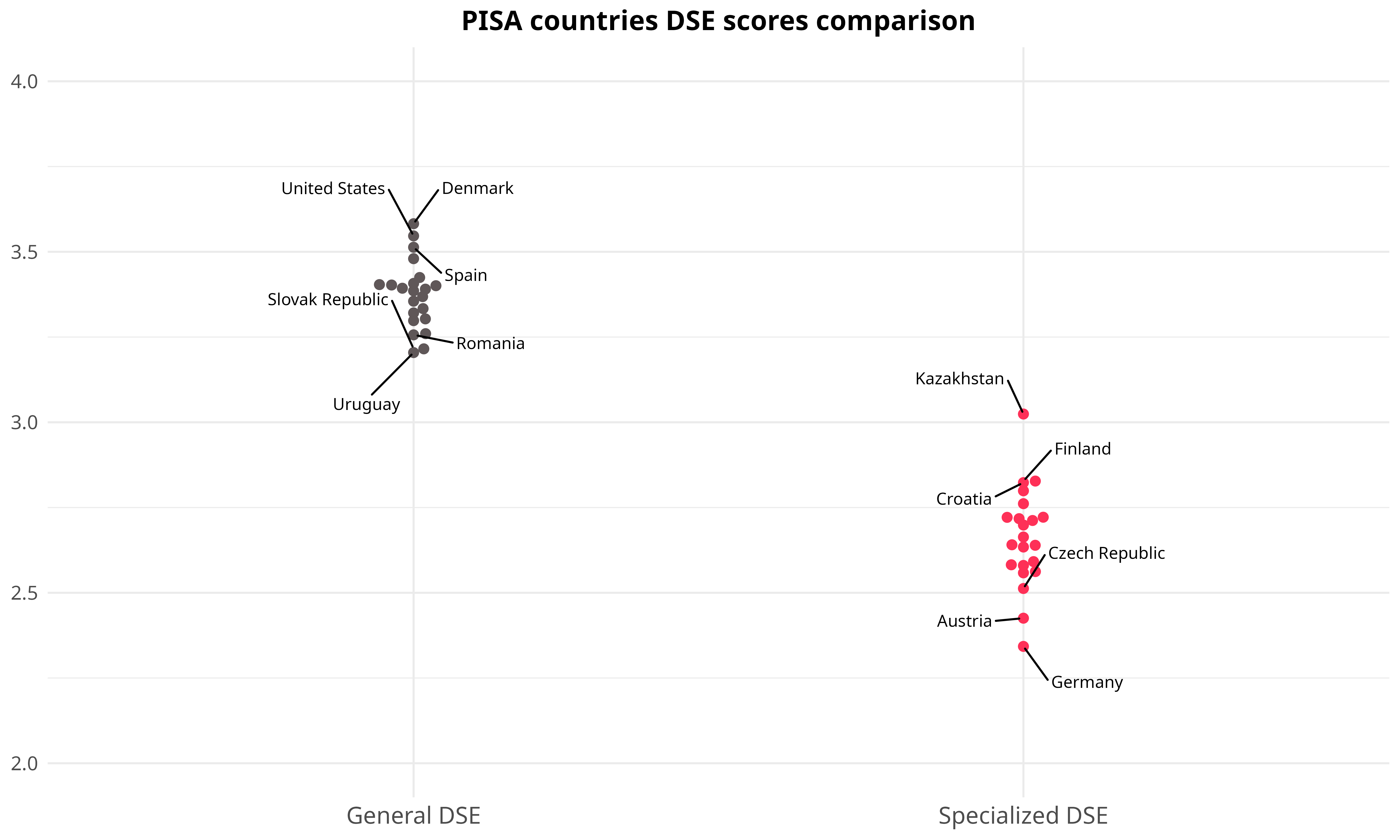
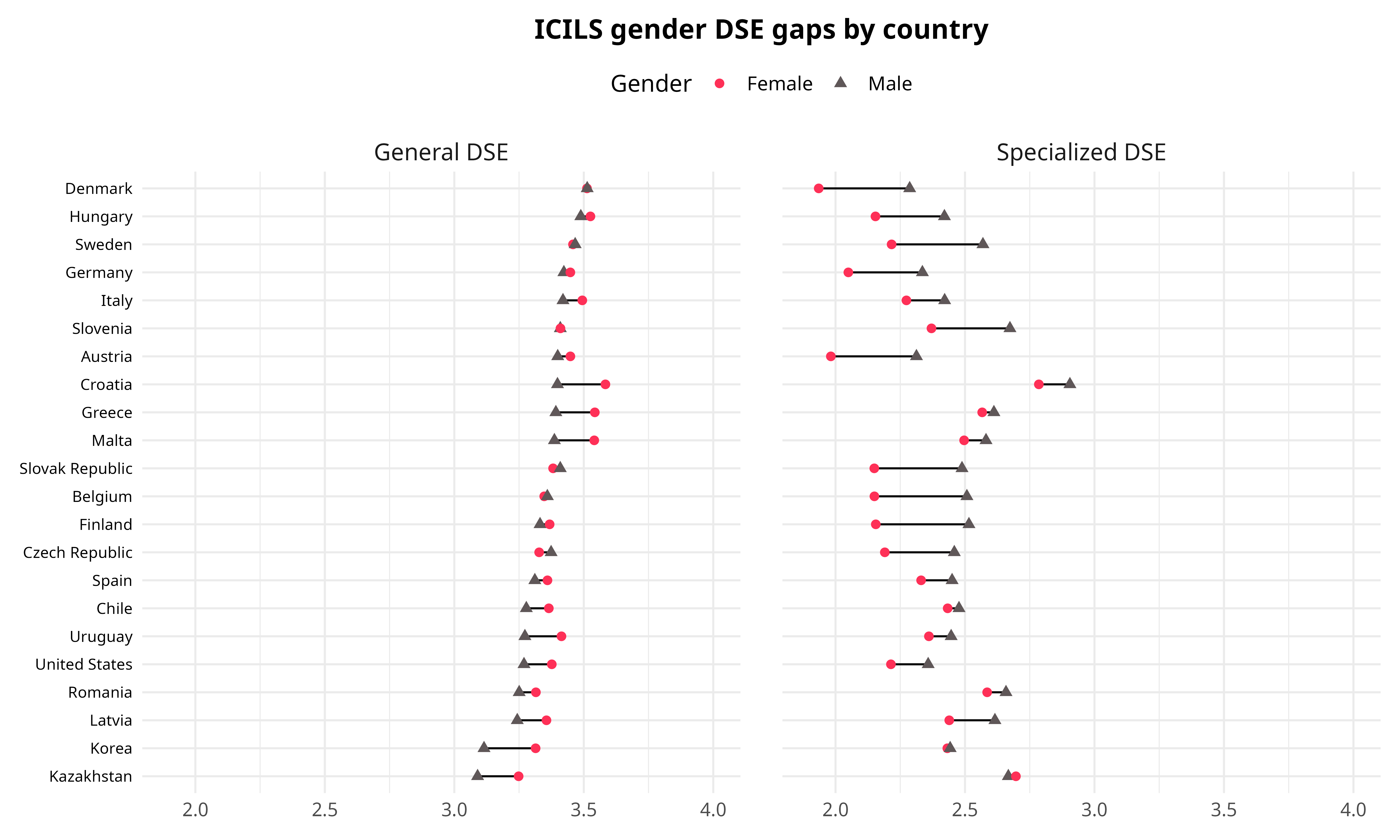
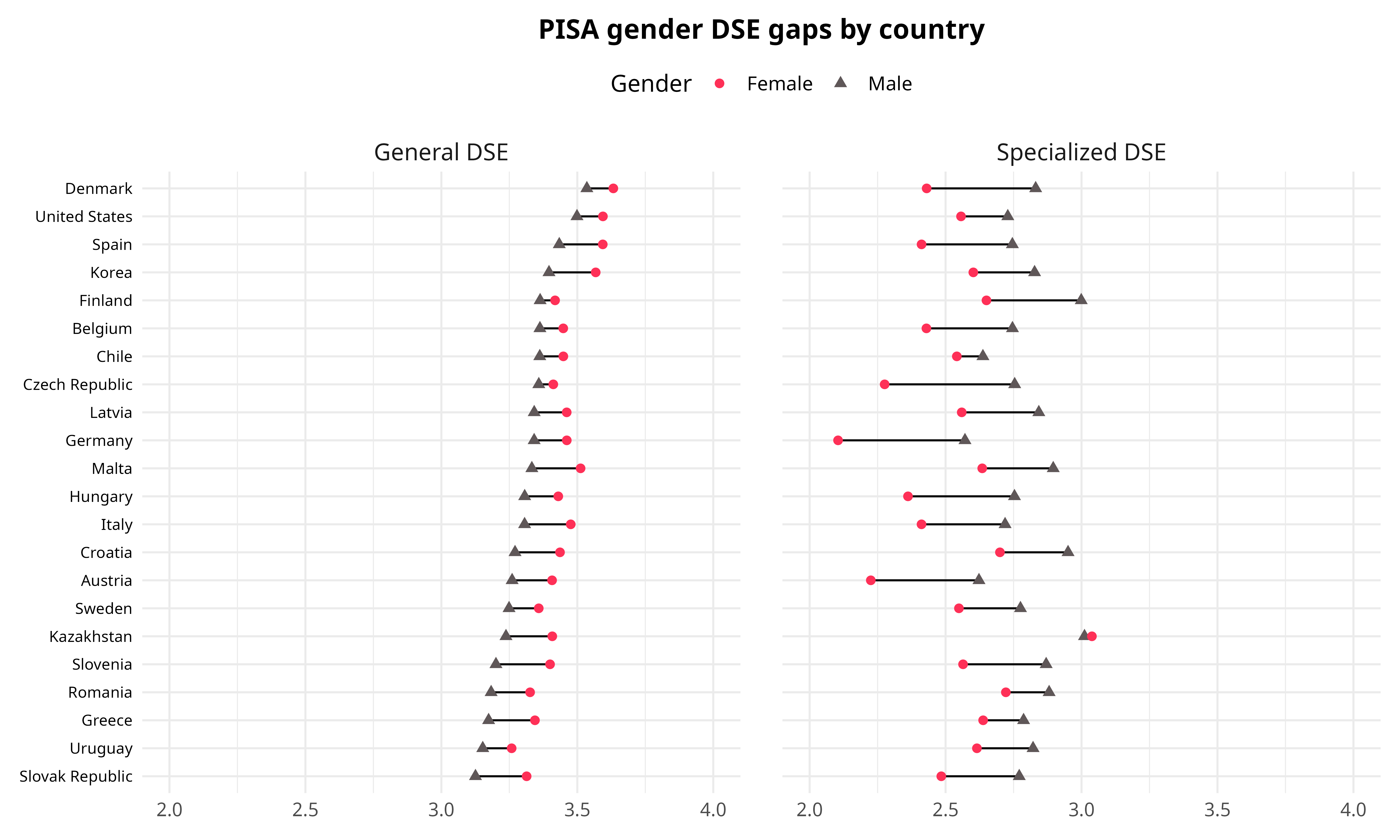
Which gender differences exist on Digital Self-efficacy across countries?
Programme for International Student Assessment 2022 (n≈183.000).
International Computer and Information Literacy Study 2023 (n≈90.000).
22 shared countries.

PISA: ¿To what extent are you able to do the following tasks when using
ICILS: How well you can do…?
General Self_Efficacy
PISA: 8 ítems, ICILS: 10 ítems
Search for and evaluate information online.
Share content online.
Write or edit text.
Create or edit images.
Specialized Self-Efficacy
PISA: 6 ítems, ICILS: 3 ítems
Website development.
Programming.
Computational reasoning.
Conformatory Factor Analizes and re-specification
Stability among countries and gender (Multigroup CFA)
Country and gender differences
CFI = 0.98; TLI = 0.97; RMSEA = 0.15, exceeding the maximum acceptable RMSEA threshold of 0.08
CFI = 0.97; TLI = 0.96; RMSEA = 0.10, exceeding the maximum acceptable RMSEA threshold of 0.08


Is it possible to identify two dimensions in PISA and ICILS?
Is the two-dimensional model of digital self-efficacy equivalent across genders and countries?
What gender differences exist in digital self-efficacy across countries?
The evolution of measurements: ICTSE vs. DSE and the DigComp framework
Are there two or more dimensions?
The counterintuitive relationship between countries’ development and the gender gap
What macro-level factors can explain the differences in digital self-efficacy and the gender gap?
What is happening in developed/developing countries?